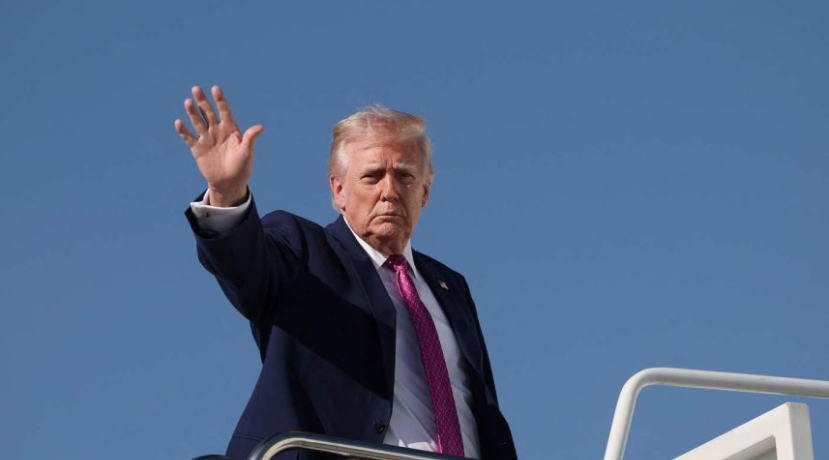
In a series of bold proclamations that have sent shockwaves through both the Middle East and Central Europe, President Donald Trump has once again asserted America’s dominance on the global stage. On April 10, 2026, as he prepared to depart Washington D.C., the President laid out a dual-track strategy of assertive maritime intervention and strategic political alliances. Most notably, Trump declared that the United States is prepared to ensure the reopening of the Strait of Hormuz regardless of Iran’s cooperation. Simultaneously, he stepped into the heated Hungarian political landscape, promising to leverage the full “economic power of the United States” to support Prime Minister Viktor Orbán. This multifaceted approach underscores a presidency that is increasingly willing to bypass traditional diplomatic hurdles to achieve its objectives, whether in securing critical energy corridors or fortifying ties with ideological allies abroad.
Unilateral Action: The “With or Without You” Policy on Hormuz
The Strait of Hormuz remains the world’s most sensitive maritime chokepoint, and President Trump’s latest comments suggest a shift toward unilateralism if negotiations fail. As peace talks in Pakistan loom, Trump signaled that his patience with Tehran has limits. Speaking to reporters before boarding Air Force One, the President was remarkably direct: “We will open the Gulf, or the Strait as they call it, very soon. I expect it to happen quickly. If not, we can finish it ourselves.” This rhetoric marks a significant escalation from previous statements, indicating that the U.S. military and economic apparatus is ready to bypass Iranian stalling tactics altogether.
The phrase “we can finish it ourselves” is a clear signal to both allies and adversaries. It suggests that the U.S. has developed a comprehensive contingency planlikely involving increased naval escorts and technological countermeasuresto neutralize Iranian interference without needing a formal agreement from the regime. For global markets, this is a double-edged sword: while it promises a swift return to shipping stability, it also raises the specter of a direct confrontation should Iran attempt to challenge the U.S. opening of the waterway. Trump’s confidence appears to stem from his belief that the U.S. now holds all the leverage, viewing the reopening not as a collaborative effort, but as a foregone conclusion enforced by American will.
Strategic Alliances: Investing in Hungary’s Future
Beyond the turbulent waters of the Middle East, President Trump has directed his attention toward the European heartland, specifically the upcoming elections in Hungary. In a strong show of support for Prime Minister Viktor Orbán, who is currently facing a fierce challenge from opponent Péter Magyar, Trump took to social media to endorse his “respected” ally. The President’s promise was unprecedented: if Orbán wins the upcoming Sunday election, Trump vows to mobilize the “economic power of the United States” to assist Hungary. This isn’t just a political endorsement; it is a promise of direct economic investment and partnership aimed at ensuring Hungary’s “future prosperity.”
Trump’s vocal support for Orbánlabeling him a “strong and powerful leader”reflects a broader strategy of building a network of like-minded leaders who prioritize national sovereignty and conservative values. By urging the Hungarian people to vote for Orbán, Trump is effectively exporting his “America First” philosophy, suggesting that a strong, independent Hungary is a vital partner for his administration. This move also serves as a warning to the European Union and other international bodies that the U.S. under Trump will continue to foster bilateral relationships that bypass traditional multi-lateral institutions, rewarding those he deems loyal and effective leaders.
The Intersection of Geopolitics and Global Markets
The President’s combined focus on the Strait of Hormuz and Hungarian economic stability highlights a presidency that views foreign policy through the lens of economic strength. By ensuring that the world’s oil remains flowing and that friendly nations like Hungary remain prosperous, the Trump administration aims to create a global environment conducive to American interests. The threat to open the strait “unilaterally” serves to stabilize oil futures by removing the uncertainty of Iranian obstruction, while the promise to Hungary signals to investors that the U.S. will protect its strategic interests in Europe.
As the world watches the unfolding situation in Pakistan and the ballot boxes in Hungary, one thing is clear: the United States is operating with a renewed sense of unilateral authority. Whether it is clearing a path for tankers in the Gulf or guaranteeing the economic future of a Central European ally, the Trump administration is demonstrating that it will not wait for global consensus to act. The next few days will test the efficacy of this “power-first” diplomacy, as the Islamabad talks and the Hungarian elections provide the first real-world results of this high-stakes strategy.